The Paradox of Toughness: How Tempered Glass Turns Internal Tension into Everyday Safety
Tempered glass, also called toughened glass, is everywhere you do not notice it: car side windows, shower doors, oven fronts, the glass panels of a phone screen, the curtain wall of a skyscraper. It is glass that has been engineered to hold a permanent state of internal war with itself—compression on the outside, tension on the inside—so that the surface resists scratching and impact, while the moment it does fail, it fails completely and safely, into thousands of blunt granules rather than dagger-like shards. Understanding how that paradox is manufactured, and where it still breaks down, is to understand one of the most consequential engineering trades in the history of materials.
Two Ways to Build a Compressed Skin
The core idea of tempering is to create a compressive stress layer at the glass surface, balanced by tensile stress in the interior. A crack can only propagate if it can pull atoms apart; if the surface is already being squeezed together, a crack has to overcome that squeeze before it can even start. The deeper and stronger the compressive layer, the harder the glass is to break.
There are two industrial routes to that stress profile, and they are not interchangeable.
Thermal tempering is the older and more widespread method. A sheet of annealed float glass is heated to roughly 600–700°C—above its transition temperature—and then blasted with forced air on both surfaces. The surface cools and rigidifies first, while the interior remains hot and fluid for a few crucial moments. As the interior finally cools and tries to contract, it is mechanically prevented from doing so by the already-rigid skin. The result is a permanent squeeze on the surface and a permanent pull in the core. Thermal tempering produces a deep compressive layer, typically extending from one-fifth to one-third of the glass thickness, but the surface stress itself is comparatively modest—generally under 100 MPa.
Chemical tempering (ion exchange) achieves the opposite profile. The glass is submerged in a molten potassium nitrate bath at around 400–500°C. Potassium ions, roughly 30% larger than the sodium ions they replace in the glass surface, are wedged into the silica network. When the glass cools, those oversized ions are physically crammed together, generating a very high surface compressive stress—often several hundred MPa—but over a much shallower depth, typically tens of microns. This is the method used for smartphone cover glass, where scratch resistance at the very surface matters more than deep impact resistance, and where thin glass cannot survive the thermal shock of air quenching.
The choice between them is a choice about what kind of abuse the glass is expected to survive. Thermal tempering makes a pane that can take a heavy blow without fracturing. Chemical tempering makes a thin sheet that can resist the microscopic scratches and flexural strains of daily handling. Neither makes glass unbreakable. Both make it fail on purpose.
The Achilles’ Heel: A Microscopic Time Bomb
The same internal tension that gives tempered glass its strength also makes it vulnerable to a defect that has haunted the industry for decades: nickel sulfide inclusions.
NiS particles form unintentionally during float glass production, when trace nickel—from raw materials, stainless steel equipment, or even a stray metallic object in the batch—reacts with sulfur from fining agents. They are rare, occurring in roughly one out of every 1,100 tonnes of raw glass, and invisible to the naked eye in an intact pane. But rarity is not the same as safety.
The problem is a phase transformation. At the high temperatures of tempering, NiS exists in a high-temperature alpha phase that occupies a smaller volume. Rapid quenching freezes it in that unstable state. Over months or years at ambient temperature, the alpha phase slowly converts to the stable beta phase, and in doing so it expands by 2.5% to 4%. If the inclusion sits within the central tensile zone—the inner 60% of the glass thickness where the glass is already being pulled apart—that tiny volumetric expansion can generate localized stresses of 800 to 900 MPa, far exceeding the glass’s intrinsic strength. A microcrack nucleates, propagates through the tensile core, and the entire pane disintegrates. The fracture pattern left behind is distinctive: a “butterfly” or “figure-eight” shape radiating from a single point, with no sign of external impact.
This is the tempered glass paradox in its purest form. The very stress state that makes the glass strong is what allows a microscopic impurity to destroy it from within. And because the transformation is time-dependent, the failure can occur years after installation—90% of NiS-induced breakages happen within six to eight years, but some have occurred after more than twenty.
The industry’s answer is the heat soak test (HST) : a post-production batch process that reheats finished tempered glass to around 290°C for a controlled period, deliberately accelerating the alpha-to-beta transformation so that defective panes break in the factory rather than on a building facade. HST significantly reduces the risk of in-service NiS failure. But it does not eliminate it. The test is not universally adopted, partly because it adds roughly 10% to product cost, and partly because it cannot filter out 100% of dangerous inclusions; some glass processors argue the residual risk remains, and the statistical evidence on HST effectiveness is more equivocal than the industry’s confidence sometimes suggests. NiS is a problem that can be managed, not solved at the source. Even a single gram of nickel reacted with sulfur can contaminate up to 6,000 tonnes of glass and generate a thousand inclusions.
Safety Is a Fracture Pattern
What makes tempered glass a “safety glass” is not that it never breaks. It is how it breaks. Annealed glass, when it fails, produces large, jagged shards that can sever arteries. Tempered glass, because of its stored elastic energy, releases that energy all at once, fragmenting into small, relatively blunt granules. The difference between a survivable accident and a catastrophic one often comes down to the geometry of the debris.
That geometry is codified in standards. EN 12150 and ASTM C1048 both require a fragmentation test: a tempered pane is broken under controlled conditions, and the resulting pieces are counted within a defined area. The common criterion is at least 40 fragments in a 50 mm × 50 mm square for fully tempered glass—a density of fragmentation that correlates with the stored stress and, by extension, with the glass’s safety performance. A pane that breaks into too few, too-large pieces has not been properly tempered, regardless of what its surface stress measurement says. The fragmentation pattern is the proof of the internal stress state; it is safety made visible in the wreckage.
This is a subtle but important point. Standards do not merely test strength; they test the mode of failure. A glass that is strong but breaks into dangerous shards is not safety glass. A glass that is weaker but fails into gravel is. Tempered glass is engineered to be the latter, and the standards exist to ensure that the engineering actually happened.
The Tension Between Performance and Sustainability
Tempered glass has become inseparable from the environmental agenda of the built environment, even as it creates its own waste problem. On the performance side, temperable low-E coatings allow a single pane to combine solar control, thermal insulation, and structural safety. The renovation of Brussels’ Victoria Tower, for instance, used a temperable solar control low-E glass to cut year-round energy demand while maintaining daylight and transparency—the glass does the work of tempering and energy efficiency in one component. In this role, tempered glass is not merely a safety feature but a passive energy technology, reducing the carbon footprint of heating and cooling.
The end-of-life picture is messier. Tempered and
laminated glass from demolished curtain walls and shopfronts have historically been difficult to recycle, often ending up in landfill because the tempering process and the presence of interlayers complicate separation. That is beginning to change. Hongkong Land, working with PolyU and Gammon Construction, has pioneered a closed-loop system in Hong Kong that converts demolished tempered and laminated glass into partition blocks and low-carbon cement alternatives for reuse within the same redevelopment project. Saint-Gobain has developed machinery to separate tempered and annealed glass from spacer bars, recovering clean cullet for new production. Recycled tempered glass is also being explored as a fine aggregate replacement in self-compacting concrete.

These are still early-stage solutions, and the volumes are small relative to the scale of architectural glazing in a city. But they point to a necessary shift: tempered glass was designed for a linear lifecycle—manufacture, install, break, discard—and the next generation of the material will have to be designed for a circular one without sacrificing the stress profile that makes it safe.

The Prince Rupert’s Drop was a paradox with no use. Tempered glass is that paradox turned into infrastructure: a material that is strong because it is stressed, safe because it shatters, and useful precisely because its failure mode has been designed rather than left to chance. The alchemists who first quenched glass in cold water were trying to make it harder. What they were actually discovering was that toughness in glass is not a property of the material itself, but of the balance of forces held within it—a balance that, once understood, could be manufactured, standardized, and relied upon, even with a microscopic flaw lurking somewhere in the melt.


 The Alchemy of Color: How Metal Oxides Turn Sand into Stained Glass, Ruby Red, and Cobalt Blue
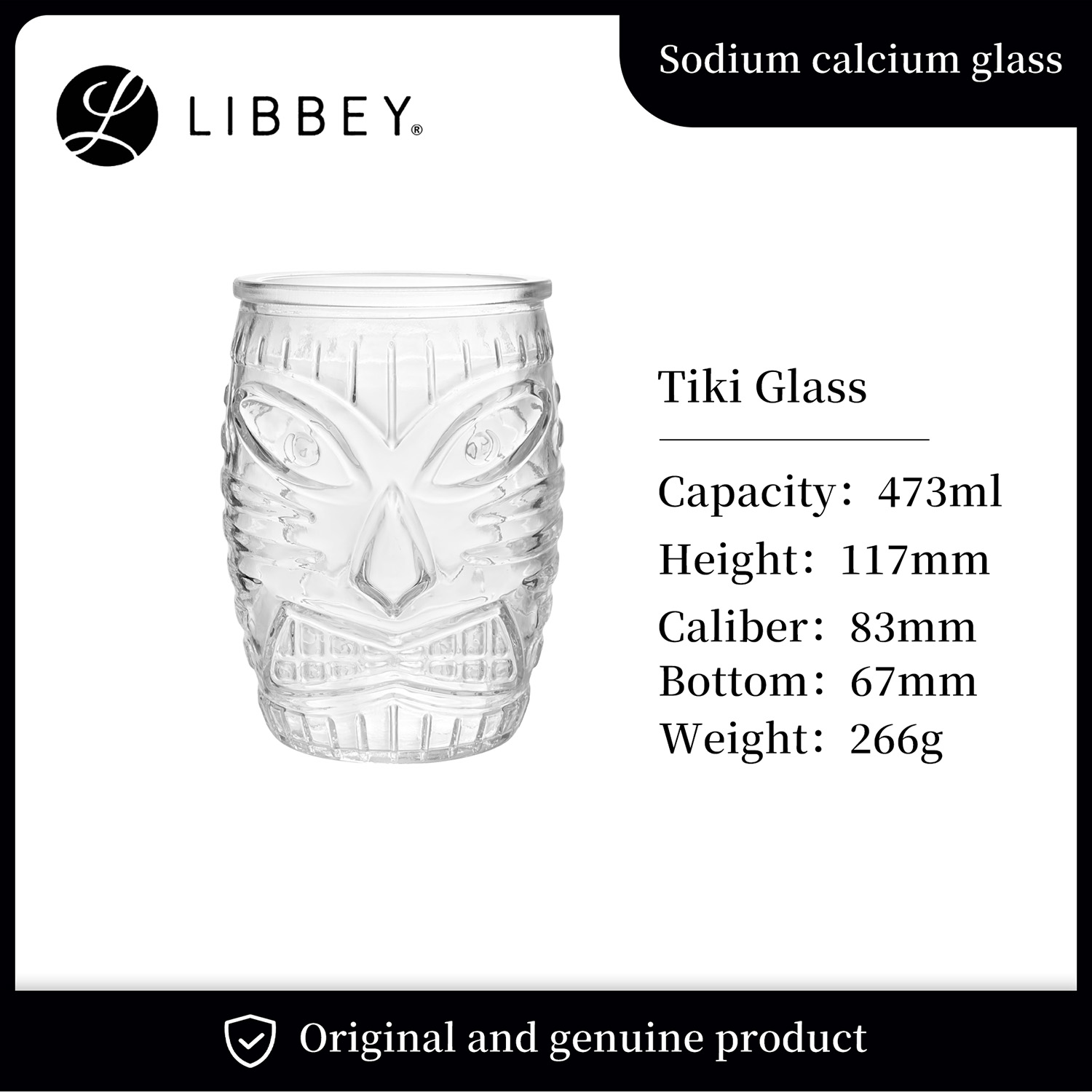
 Libbey: The Glassmaker That Built American Drinking, Then Learned to Disappear
 Hot Cut vs. Cold Cut: What a Glass Rim Really Tells You
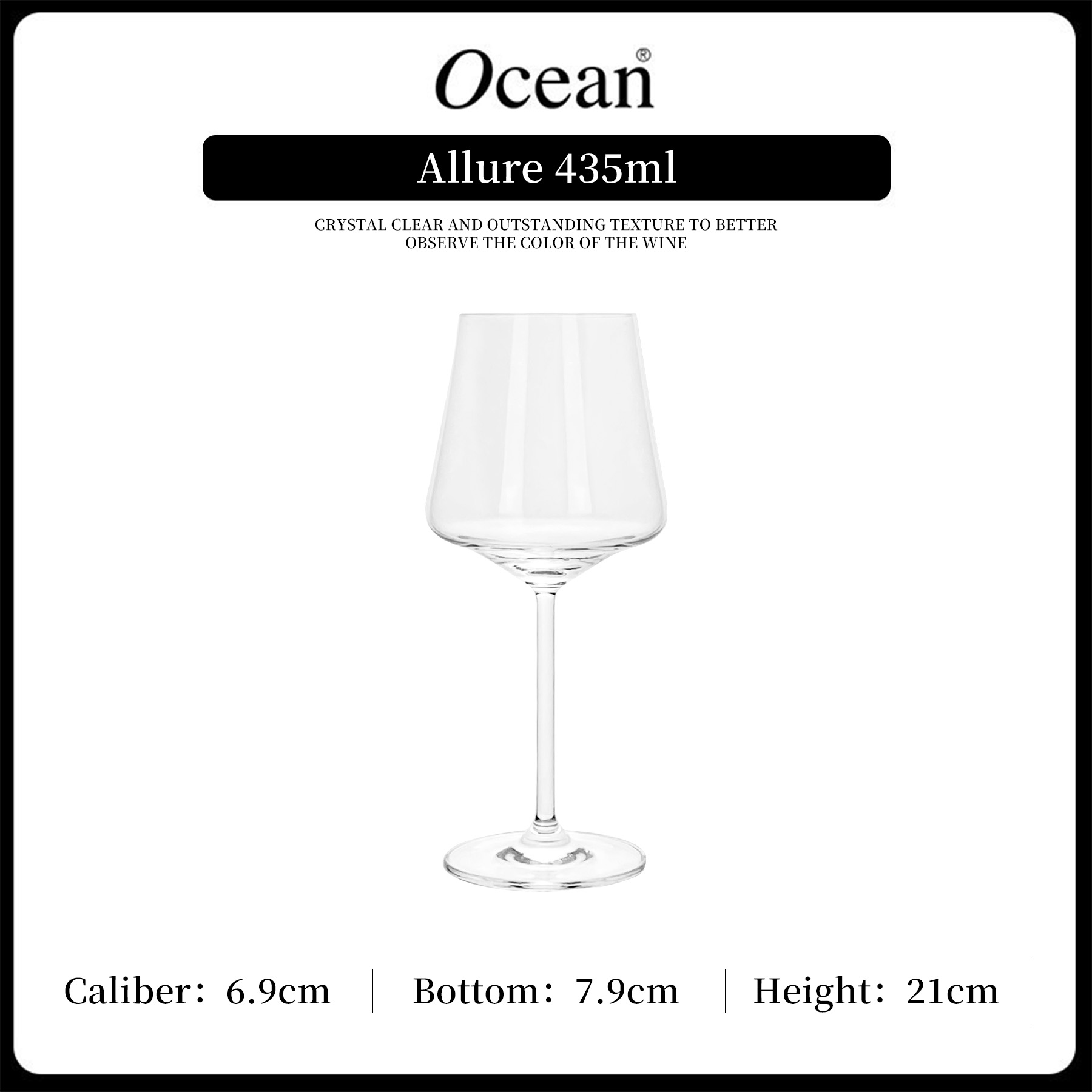 ressed Glass Tumblers: How a Simple Water Cup Is Actually Made


