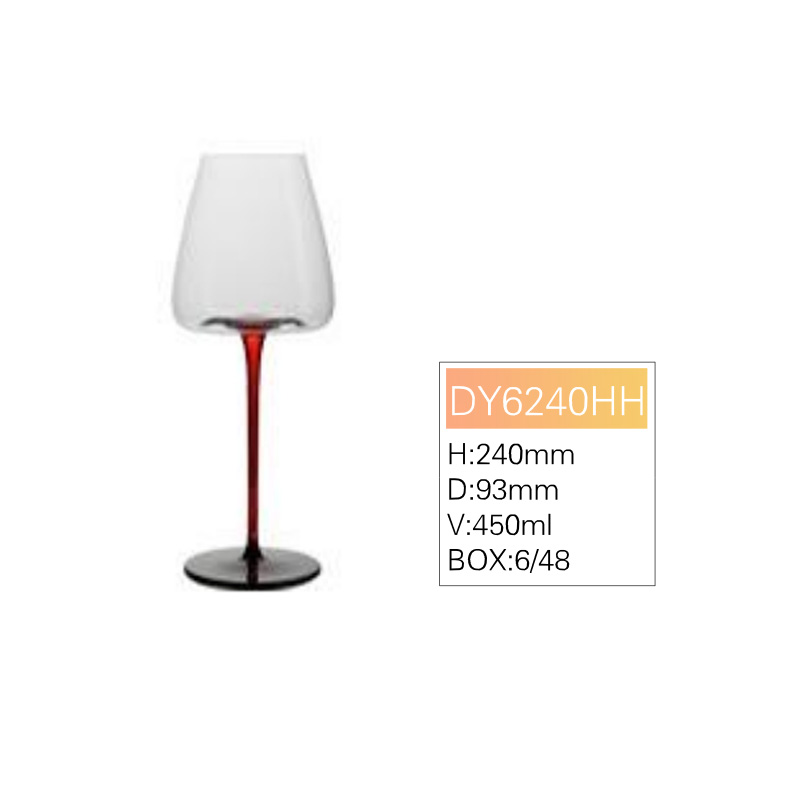
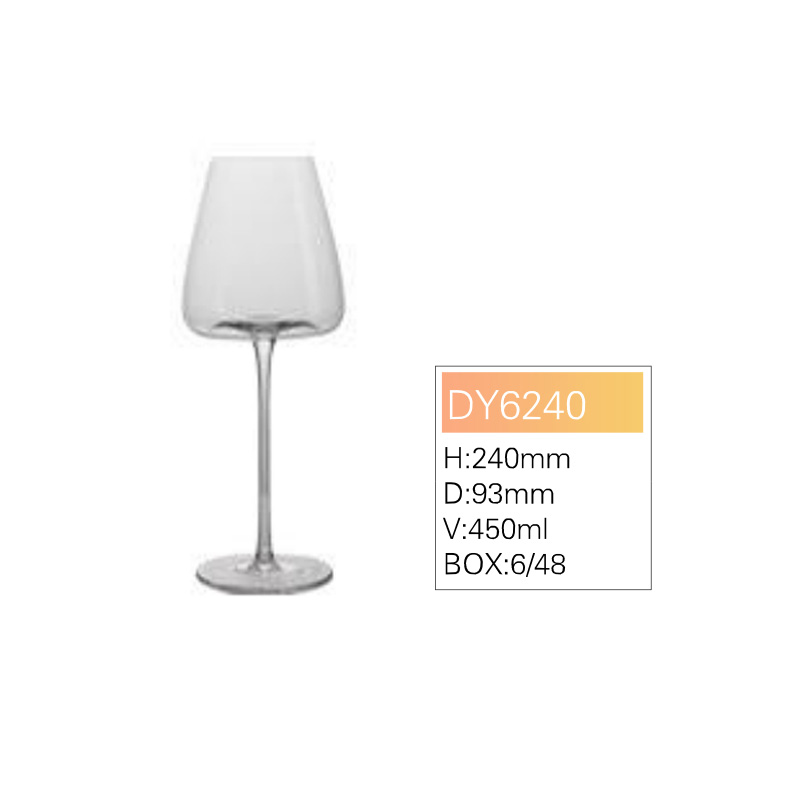
In the one-piece drawn method, the bowl, stem, and often the foot are formed from a single continuous piece of molten glass. The stem is literally "pulled" or "drawn" out from the base of the bowl while the glass is still hot and pliable, then the foot is shaped from the end of that same stem. This creates a seamless, monolithic structure with no joints or weak points.
By contrast, three-piece construction involves molding the bowl, stem, and foot separately and welding them together. These welded joints are the glass's most vulnerable spots and are prone to breakage.
Visual Inspection: Look for Seams
The most reliable way to identify a one-piece drawn glass is to examine it under good lighting. Tilt the glass and look closely at the area where the bowl transitions into the stem, and again where the stem meets the foot.
· One-piece drawn: You'll see a smooth, uninterrupted surface with no visible seam, ridge, or parting line. The transition from bowl to stem is fluid and organic.
· Three-piece (welded): You may notice a faint line, a slight bulge, or a subtle color shift at the junction points. Under magnification, the weld point becomes even more apparent.
A handy touch test: run your fingertip gently around the bowl-to-stem junction. If you feel a ridge or bump, it's likely a welded piece. A drawn stem feels perfectly smooth in every direction.
Weight and Balance
One-piece drawn glasses tend to be notably lighter and more elegant than their welded counterparts. Because the stem is stretched from the same gather of glass as the bowl, manufacturers can achieve an extremely thin, tapered profile without sacrificing structural integrity.
Pick up the glass and hold it by the stem. A well-made drawn glass will feel balanced—the foot should adequately counterweight the bowl so the glass doesn't feel top-heavy. Brands like Riedel have developed specialized machines that draw stems equal in fineness to those made by master glassmakers, with base diameters up to 100 mm.
The Sound Test
Tap the widest part of the bowl gently with your fingernail. A high-quality crystal glass—whether drawn or hand-blown—should produce a clear, bell-like ring that lingers for several seconds. Lower-quality glass with welded joints tends to emit a duller, shorter clink.
While the sound test primarily reflects the material (crystal vs. regular glass) rather than the construction method alone, it's a useful complementary check when evaluating overall quality.
Why the Drawn Process Matters
The one-piece drawn method isn't just about aesthetics—it has real functional benefits:
· Greater durability: Without welded joints, there are no weak points where the stem meets the bowl. This significantly enhances mechanical resistance and makes the glass far less likely to snap at the stem.
· Thinner, more refined profile: The drawing process allows manufacturers to produce remarkably slim stems and delicate rims that rival hand-blown quality.
· Better balance and swirling: A seamless, lightweight stem makes it easier to swirl wine for aeration without feeling awkward or unstable.
· Dishwasher resilience: Many one-piece drawn glasses maintain their clarity even after hundreds of industrial dishwashing cycles, thanks to the absence of structural seams.
Common Misconceptions
It's worth noting that a drawn stem doesn't automatically mean the glass is hand-made. Modern machine production—particularly at facilities like Riedel's Weiden factory in Germany—can produce drawn stems that are virtually indistinguishable from hand-blown ones. The key distinction is between one-piece drawn construction and multi-piece welded construction, not between handmade and machine-made.
Conversely, some hand-blown glasses actually use a
three-piece approach, where the bowl and stem are formed together but the foot is attached separately. So always rely on visual and tactile inspection rather than assumptions about the manufacturing method.
Quick Checklist
Next time you're shopping for wine glasses, run through this quick checklist:
1. Inspect the junctions — no seam at bowl-to-stem or stem-to-foot means one-piece drawn.
2. Run your finger around the stem — smooth all around, no ridges or bumps.
3. Feel the weight — surprisingly light and balanced in the hand.
4. Tap and listen — clear, sustained bell-like tone.
A one-piece drawn wine glass represents the gold standard of modern stemware engineering. Once you know what to look—and feel—for, you'll never settle for a welded glass again.


 The Paradox of Toughness: How Tempered Glass Turns Internal Tension into Everyday Safety
 The Alchemy of Color: How Metal Oxides Turn Sand into Stained Glass, Ruby Red, and Cobalt Blue
 Libbey: The Glassmaker That Built American Drinking, Then Learned to Disappear
 Hot Cut vs. Cold Cut: What a Glass Rim Really Tells You


